


26 October, 2026
Rig Accident Safety Lessons | ISO 45001 Lead Implementer Nigeria
When a Rig Sinks: 5 Workplace Safety Lessons Every Organisation Should Take Seriously
A workplace incident can change everything in minutes. The real test of safety management is what an organisation does before those minutes arrive.
That question is back in focus following the sinking of Borr Drilling’s Prospector 5 offshore Gabon on 24 October 2026. The company said 115 people were on board, 110 had been accounted for, and five were initially unaccounted for as search-and-rescue operations continued. Its preliminary account pointed to a “punch-through” during preload activities, which caused the rig to lose stability. The incident is under investigation, so the final causes should not be assumed.
The incident is not proof that a particular management system was or was not in place. But it is a stark reminder for every high-risk workplace: hazards must be identified, controls must work in practice, and people must know what to do when conditions change.
For organisations in oil and gas, construction, manufacturing, logistics, facilities management and other sectors, the principles behind ISO 45001 offer a structured way to manage occupational health and safety (OH&S). Here are five practical lessons leaders can take from the news.
1. Risk assessment must reflect the work happening today
A risk assessment should not be a document completed once and then forgotten. Work conditions change: equipment moves, weather shifts, ground conditions differ, contractors change, and teams face new pressures. Before a high-risk task begins, teams need to understand the hazards, the possible consequences and the controls required.
ISO 45001 encourages organisations to identify hazards, assess OH&S risks and opportunities, and plan controls before work proceeds. In practice, this means reviewing the job when conditions change, checking assumptions and giving workers a clear way to stop work if the risk is no longer controlled.
2. Procedures are only useful when controls are verified
A procedure can look perfect on paper and still fail at the worksite. Leaders need evidence that controls are available, understood and effective. That may include equipment checks, permits, competent supervision, safe-work briefings and verification that critical steps have been completed.
The useful question is not simply, “Do we have a safety procedure?” It is, “How do we know the procedure is being followed, and what would make us pause the job?”
3. Emergency readiness cannot begin after an incident
Emergency plans need clear responsibilities, reliable communication, suitable equipment and regular practice. Workers and contractors should know how to raise an alarm, where to go, who coordinates the response and how people are accounted for. Drills can expose gaps that a written plan will not.
Organisations should review exercises and real incidents for lessons, update plans and make sure workers receive information relevant to their roles.
4. Worker participation helps reveal risks management may miss
People doing the work often notice warning signs first: a recurring equipment fault, an unsafe shortcut, unclear instructions or pressure to finish a task despite changing conditions. A strong safety system makes it easy to report concerns without fear of blame and ensures reports lead to action.
Consulting workers is not just a meeting-room exercise. It means listening, closing the feedback loop and involving relevant people when procedures and controls are designed or reviewed.
5. Learn from near misses, not only serious accidents
A near miss is an opportunity to correct a weakness before someone is hurt. Organisations should investigate incidents proportionately, look beyond the immediate mistake, identify contributing system factors and assign actions with owners and deadlines. Repeated findings are a signal that the corrective action may not be working.
Useful measures include whether actions are closed on time, whether inspections identify recurring issues, whether workers understand key controls and whether corrective actions reduce the chance of recurrence. Counting training sessions alone does not tell the full story.
Where ISO 45001 Lead Implementer training fits in
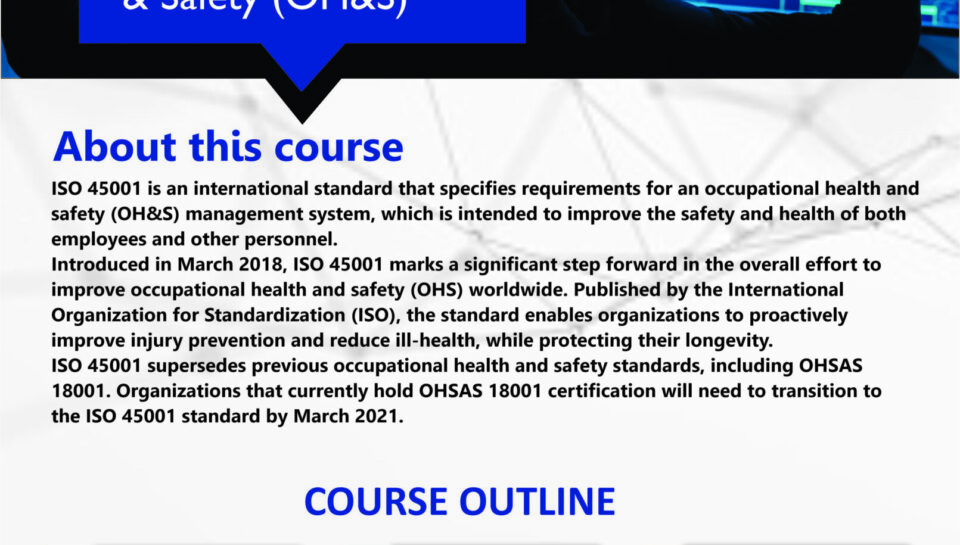
ISO 45001 is an international standard for an occupational health and safety management system. It helps organisations build a consistent approach to identifying hazards, meeting applicable obligations, controlling risk, preparing for emergencies and improving performance. Certification is not a guarantee that accidents can never happen; implementation must be supported by competent people and effective day-to-day practice.
An ISO 45001 Lead Implementer develops the knowledge to help an organisation establish, implement, maintain and continually improve its OH&S management system. That is different from a Lead Auditor, whose focus is on planning and conducting audits to evaluate whether the system meets requirements and works as intended.
If your role involves HSE, QHSE, operations, compliance, consulting or management-system implementation, structured training can help you turn standard requirements into an organised implementation plan. It can also help you connect risk assessment, operational controls, worker participation, documentation, performance review and continual improvement.
Train with Training Heights
Training Heights offers ISO 45001 Lead Implementer training in Occupational Health and Safety (OH&S) for professionals who want to build practical implementation competence.
Course: ISO 45001 Lead Implementer – Occupational Health & Safety (OH&S)
Date shown on the current course flyer: 3–5 November
Fee: ₦450,000, inclusive of certification
Delivery: Virtual instructor-led training
To confirm the current class schedule and availability, contact Training Heights on +234 806 726 9749 or email victoria.oyedeji@trainingheights.com. You can also visit the [ISO 45001 training in Nigeria course page].
The goal is not to collect a certificate and return to business as usual. It is to build the competence to help make safety responsibilities clear, controls practical and improvement continuous.
Frequently asked questions
What is ISO 45001 used for?
ISO 45001 provides requirements for an occupational health and safety management system. Organisations use it to manage work-related hazards, fulfil applicable obligations and improve OH&S performance.
What does an ISO 45001 Lead Implementer do?
A Lead Implementer helps plan, establish, implement, maintain and improve an organisation’s ISO 45001 management system.
Does ISO 45001 guarantee that workplace accidents will not happen?
No. It provides a structured approach to managing OH&S risks, but no standard can eliminate every hazard or guarantee zero incidents. Results depend on implementation and ongoing practice.
What is the difference between ISO 45001 Lead Implementer and Lead Auditor?
A Lead Implementer focuses on building and maintaining the management system. A Lead Auditor focuses on evaluating the system through audits and reporting findings.
Who should take ISO 45001 Lead Implementer training?
It may suit HSE and QHSE professionals, safety managers, operations managers, compliance staff, consultants and people responsible for implementing an OH&S management system. Check the course provider’s prerequisites before enrolling.
How much is ISO 45001 Lead Implementer training at Training Heights?
The supplied Training Heights flyer lists ₦450,000, inclusive of certification, for the 3–5 November class. Contact the provider to confirm that the date and fee remain current before making payment.
📞 Spots are limited – don’t miss out!
Ready to Learn?
Take the next step in your career with this course. Enhance your skills today.
🎥 Virtual, instructor-led sessions – Learn from the best, wherever you are.
🌍 Globally recognized certifications – Boost your credibility worldwide.
🕒 Flexible schedules – Learn at your convenience.
🧑🏫 Expert trainers & hands-on learning – Real skills, real impact.
💰 Affordable pricing & group discounts – Learn more, save more.