

4 November, 2026
Business Continuity Plan in Nigeria: Beyond the Generator
If Your Business Had to Stop Today, How Quickly Could It Recover?
Think about a business that depends on its people, digital systems, suppliers, facilities and daily operations to serve customers. What happens if one of those things suddenly becomes unavailable?
A cyberattack could lock employees out of essential systems. A fire could make an office or production site inaccessible. A supplier failure, power disruption or serious incident could interrupt services. The immediate problem is the disruption. The bigger question is how prepared the organisation is to respond and recover.
As conversations around major industrial projects and critical infrastructure continue to attract attention in Nigeria, one issue deserves more attention from every organisation: business continuity. This is where ISO 22301 becomes important.
What is ISO 22301, and why does business continuity matter?
ISO 22301 is the international standard for a Business Continuity Management System (BCMS). It gives organisations a structured way to prepare for disruptive incidents, respond effectively and continue delivering important products and services.
It is not simply a document kept on a shelf or a disaster recovery checklist. A BCMS connects leadership, risk assessment, business impact analysis, recovery strategies, communication, testing, performance evaluation and continual improvement.
The goal is practical: understand what matters most to the organisation, identify what could interrupt it and decide how essential activities will continue or recover within acceptable timeframes.
A business continuity plan is not the same as a complete BCMS
This distinction is easy to miss. A business continuity plan describes what people should do during a disruption. A Business Continuity Management System provides the wider framework for creating, approving, using, testing, reviewing and improving those plans.
For example, an organisation may have a backup server. However, can employees access it? Are responsibilities clear? Have recovery arrangements been tested? Can critical suppliers still deliver? Does management know which services must be restored first?
These questions show why business continuity must involve more than the IT department. It requires coordination across the organisation.
What does ISO 22301 help an organisation prepare for?
Disruptions do not always arrive as dramatic disasters. They can begin with a failed system, unavailable staff, damaged premises, a supplier problem, a security incident or a breakdown in an essential service.
An effective BCMS helps an organisation assess these risks and understand their potential impact. It also helps determine recovery priorities, assign responsibilities, establish communication arrangements and test whether the response will work.
One important activity is the Business Impact Analysis (BIA). It helps identify critical activities, the consequences of disruption and the resources needed to resume operations. Risk assessment then helps the organisation understand threats and select appropriate continuity strategies.
How do organisations implement ISO 22301?
Implementation should reflect the organisation’s size, activities, risks and obligations. However, the process generally involves defining the BCMS scope, securing leadership commitment, assessing risks, conducting a business impact analysis and setting continuity objectives.
The organisation then develops recovery strategies, response procedures and business continuity plans. It assigns roles, trains relevant employees and tests the arrangements through exercises. Finally, it evaluates performance, conducts reviews and improves the system.
ISO 22301 follows the Plan-Do-Check-Act management-system approach. This means continuity is not a one-off project. It is a system that must remain relevant as the organisation, its risks and its operating environment change.
Who should consider ISO 22301 Lead Implementer training?
ISO 22301 Lead Implementer training is relevant to professionals who need to lead, coordinate or support the implementation of a Business Continuity Management System. This includes business continuity and risk managers, operations managers, consultants, IT and information security professionals, compliance officers, management system practitioners and members of implementation teams.
It is also valuable for professionals who want to develop a stronger understanding of organisational resilience and how to translate the ISO 22301 requirements into an implementable management system.
Build the capability to implement business continuity with Training Heights
Understanding why business continuity matters is a starting point. Knowing how to establish, implement, monitor and continually improve a BCMS is the next step.
Training Heights Limited is offering ISO 22301 Lead Implementer – Business Continuity Management System training from 18–20 November 2026. The programme is designed to develop the knowledge and practical understanding needed to lead the implementation of a BCMS.
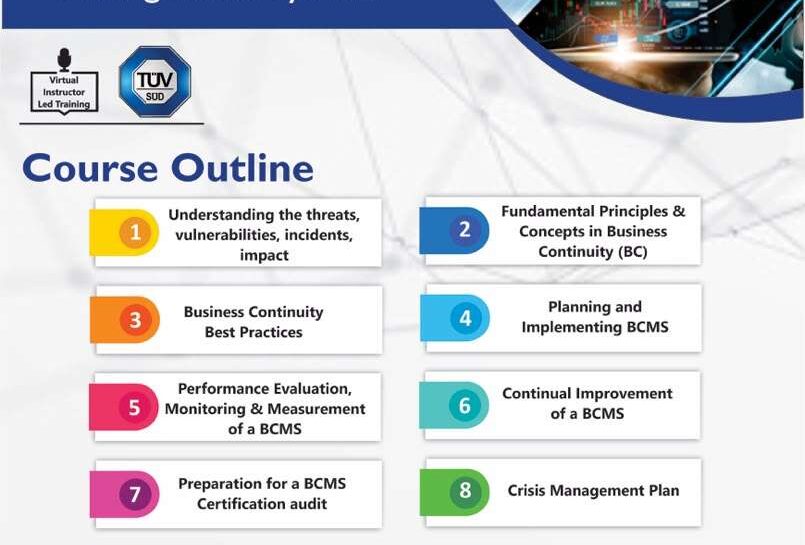
The course covers the threats, vulnerabilities and impacts that can disrupt operations; the principles of business continuity; BCMS planning and implementation; performance evaluation; continual improvement; certification audit preparation; crisis management; business continuity and disaster recovery planning; plan maintenance; and corrective action.
Course details:
- Course: ISO 22301 Lead Implementer – Business Continuity Management System
• Date: 18–20 November 2026
• Fee: ₦480,000 (inclusive of certification)
• Enquiries: +234 806 726 9749
• Email: victoria.oyedeji@trainingheights.com
• Website: www.trainingheights.com
If your role involves protecting essential operations, preparing for disruption or helping an organisation build a stronger continuity framework, this is an opportunity to develop the implementation skills required. Contact Training Heights to register or request further course information.
Frequently asked questions about ISO 22301
What is ISO 22301 used for?
ISO 22301 is used to establish, implement, maintain and continually improve a Business Continuity Management System. It helps organisations prepare for disruptions and continue delivering prioritised products and services.
What is a Business Continuity Management System (BCMS)?
A BCMS is a management framework that brings together policies, responsibilities, risk assessment, business impact analysis, continuity plans, testing, performance reviews and improvement activities.
What is the difference between ISO 22301 and a disaster recovery plan?
ISO 22301 covers the organisation-wide management system for business continuity. A disaster recovery plan is usually a more specific set of arrangements for restoring systems, technology, data or other resources after disruption. Disaster recovery can support a BCMS, but it is not the whole system.
What is a Business Impact Analysis (BIA)?
A BIA identifies an organisation’s important activities and examines how disruption could affect them. It helps establish recovery priorities and the resources needed to resume operations.
Who needs ISO 22301 Lead Implementer training?
It is suited to professionals responsible for, or involved in, implementing a BCMS, including business continuity, risk, operations, IT, compliance and consulting professionals.
How long is the Training Heights ISO 22301 Lead Implementer course?
The advertised Training Heights programme runs for three days, from 18 to 20 November 2026.
How much does the Training Heights ISO 22301 Lead Implementer training cost?
The advertised fee is ₦480,000, inclusive of certification.
📞 Spots are limited – don’t miss out!
Ready to Learn?
Take the next step in your career with this course. Enhance your skills today.
🎥 Virtual, instructor-led sessions – Learn from the best, wherever you are.
🌍 Globally recognized certifications – Boost your credibility worldwide.
🕒 Flexible schedules – Learn at your convenience.
🧑🏫 Expert trainers & hands-on learning – Real skills, real impact.
💰 Affordable pricing & group discounts – Learn more, save more.