


6 July, 2026
Information Security Training: Build Cybersecurity Skills That Reduce Risk
Information Security Training: Build Cybersecurity Skills That Reduce Risk
Every organisation now depends on digital systems, customer data, cloud tools, mobile devices, email, payment platforms, and third-party vendors. That creates opportunity, but it also creates risk. A single weak password, phishing email, misconfigured cloud account, exposed database, or poor access-control process can turn into a serious security incident.
This is why information security training matters. It helps professionals understand how to protect information, reduce cyber risk, choose the right security controls, respond to incidents, and support safer business decisions.
For anyone searching for cybersecurity training, information security courses, cyber risk management, or a stronger security career path, the first step is understanding what skills matter. For experienced professionals, one advanced route is CISSP, which stands for Certified Information Systems Security Professional.
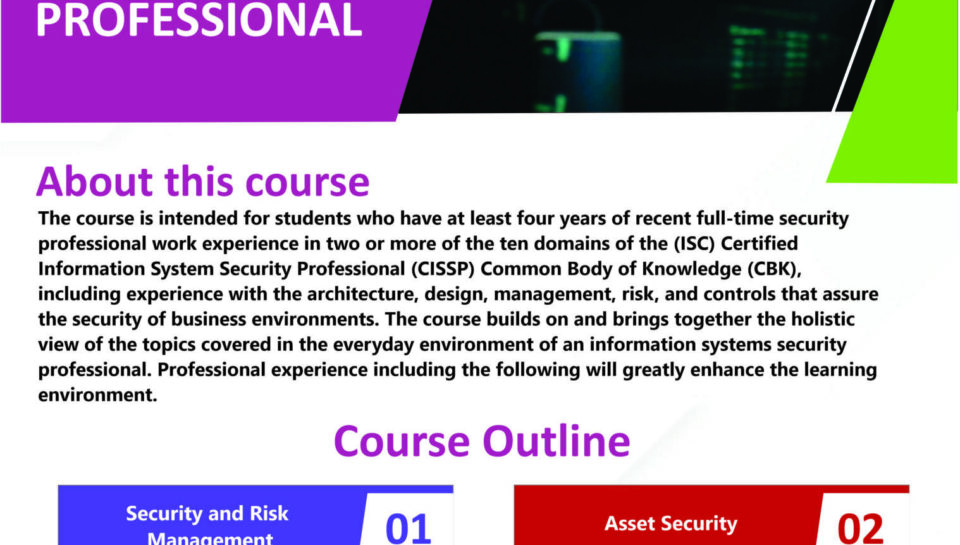
Training Heights provides CISSP training as a virtual instructor-led course. The supplied course flyer lists the fee as ₦350,000, training only, and the class date as 13th to 17th July. Readers should confirm the next available class date before registering.
What Is Information Security Training?
Information security training teaches people how to protect data, systems, networks, applications, and business processes from misuse, loss, exposure, theft, disruption, and unauthorized access. It is not only about installing tools. Strong security work includes policies, people, technology, risk decisions, compliance, monitoring, testing, incident response, and continuous improvement.
Good training helps you understand why a control is needed, how it reduces risk, and when it should be applied. For example, password rules are not enough if identity management is weak. Firewalls are not enough if network design is poor. Backups are not enough if recovery is never tested. Security works best when the whole system is understood.
Information Security vs Cybersecurity: What Is the Difference?
Information security is the broader practice of protecting information in any form, whether digital, printed, spoken, stored, or transmitted. Cybersecurity focuses more directly on protecting digital systems, networks, applications, devices, and online services from cyber threats.
In the workplace, the two areas overlap. A cybersecurity professional may investigate phishing attacks, secure networks, manage cloud access, test vulnerabilities, and monitor systems. An information security professional may also work on governance, risk, data classification, policies, audit readiness, privacy, business continuity, and security awareness. Modern organisations need both perspectives.
Why Businesses Need Information Security Skills Now
Cyber risk is no longer limited to banks or technology companies. Schools, hospitals, SMEs, government agencies, fintechs, manufacturers, telecoms, consulting firms, and online businesses all handle information that must be protected.
The pressure is practical. Customers expect privacy. Regulators expect accountability. Management wants continuity. Staff need safe systems to do their jobs. Attackers look for weak processes, untrained users, outdated systems, exposed credentials, and poorly managed third-party access.
This is why employers value professionals who can look beyond one tool and understand the full security picture. They need people who can ask: What information is most important? Who should access it? What could go wrong? Which controls reduce the risk? How do we test those controls? What happens if an incident occurs?
Core Cybersecurity Skills Covered in Strong Information Security Training
A strong course should help learners build practical understanding across the areas that matter most in real security work:
- Security and risk management: how to identify risk, create policies, support compliance, and align security with business goals.
- Asset security: how to classify, handle, retain, and protect sensitive business and customer information.
- Security architecture and engineering: how secure systems are designed, built, tested, and strengthened.
- Communication and network security: how networks, data transmission, segmentation, and secure communication work.
- Identity and access management: how to control who can access systems, data, and applications.
- Security assessment and testing: how to check whether controls are working through audits, reviews, tests, and metrics.
- Security operations: how to monitor systems, respond to incidents, manage recovery, and keep services running.
- Software development security: how to reduce application risk through secure design, coding, testing, and lifecycle practices.
Where CISSP Fits Into Information Security Training
CISSP is an advanced information security certification for professionals who want to show that they can design, implement, and manage a broad security programme. It is best known for its wide coverage of governance, risk, architecture, networks, identity, testing, operations, and software security.
This makes CISSP especially useful for experienced IT, audit, risk, compliance, networking, systems administration, cloud, software, and cybersecurity professionals who want to move into roles such as Information Security Manager, Security Architect, Cybersecurity Consultant, Risk and Compliance Manager, Security Auditor, SOC Lead, IT Manager, or CISO-track positions.
For full CISSP certification, ISC2 requires five years of cumulative paid work experience in two or more of the eight CISSP domains. A one-year experience waiver may apply for a relevant degree or approved credential. People who pass the exam before completing the experience requirement can work toward Associate of ISC2 status while gaining the required experience.
What the Training Heights CISSP Course Covers
The Training Heights course is structured around the eight CISSP domains, but the value is not just memorising definitions. The aim is to help participants connect security concepts to real workplace decisions: how governance guides controls, how asset value affects protection, how identity reduces exposure, how testing validates security, and how operations keep the business resilient.
This structure is helpful for professionals who already work around technology or risk but need a clearer, more organised way to understand the full security landscape.
Training Heights CISSP Course Details
Course: Certified Information Systems Security Professional (CISSP) Training
Date on supplied flyer: 13th – 17th July
Fee: ₦350,000, training only
Mode: Virtual Instructor-Led Training
Provider: Training Heights
Contact: +234 806 726 9749 | victoria.oyedeji@trainingheights.com
Address: 2 Bamishile Street, Off Allen Avenue, Ikeja, Lagos
How to Know If This Training Is Right for You
This training is a good fit if your current work already touches IT, security, audit, risk, compliance, networks, systems, cloud, governance, or software, and you want a wider understanding of how security decisions are made. It is also useful if you are preparing for more senior responsibilities and need to speak confidently about cyber risk, controls, policies, incident response, and business impact.
If you are completely new to technology, you may first need foundational training in IT, networking, and basic cybersecurity concepts before moving into CISSP. However, if you already have professional experience and want a structured security leadership path, CISSP training can help you organise what you know and strengthen the areas you have not yet mastered.
Course Fee and Registration Details
The Training Heights CISSP training fee shown on the supplied flyer is ₦350,000, training only. The format is virtual instructor-led training, which gives learners a structured class while allowing participation from different locations.
To ask about registration, updated dates, or the next available cohort, contact Training Heights on +234 806 726 9749 or victoria.oyedeji@trainingheights.com. You can also visit www.trainingheights.com for more information.
People Also Search For Questions: Information Security, Cybersecurity and CISSP FAQs
What is information security training?
Information security training teaches professionals how to protect data, systems, networks, applications, and business processes from misuse, loss, theft, disruption, and unauthorized access.
Is information security the same as cybersecurity?
They overlap, but they are not exactly the same. Information security protects information in any form, while cybersecurity focuses mainly on digital systems, networks, applications, devices, and online threats.
How do I start a career in cybersecurity?
Start by building foundations in IT, networking, operating systems, cloud basics, risk, and security principles. Then choose a pathway such as security operations, governance, cloud security, risk and compliance, application security, or advanced certification preparation.
What cybersecurity skills do employers look for?
Employers often look for risk awareness, access control, network security, incident response, vulnerability management, cloud security, security monitoring, policy understanding, communication, and problem-solving.
What is CISSP certification?
CISSP stands for Certified Information Systems Security Professional. It is an advanced information security certification for professionals who design, implement, and manage cybersecurity programmes.
Is CISSP for beginners?
CISSP is not usually a beginner certification. It is best for experienced professionals, although people without the full experience can pass the exam and work toward Associate of ISC2 status while gaining the required work experience.
What are the CISSP requirements?
ISC2 requires five years of cumulative paid work experience in two or more CISSP domains. A one-year waiver may apply for a relevant degree or approved credential.
What are the eight CISSP domains?
The eight domains are Security and Risk Management, Asset Security, Security Architecture and Engineering, Communication and Network Security, Identity and Access Management, Security Assessment and Testing, Security Operations, and Software Development Security.
How much is CISSP training with Training Heights?
The supplied Training Heights flyer lists the CISSP training fee as ₦350,000, training only. Readers should confirm the next available class date before registering.
Can information security training help if I am not ready for CISSP?
Yes. Even if you are not ready for CISSP, information security training can help you understand cyber risk, protect data, improve security decisions, and identify the right career path.
📞 Spots are limited – don’t miss out!
Ready to Learn?
Take the next step in your career with this course. Enhance your skills today.
🎥 Virtual, instructor-led sessions – Learn from the best, wherever you are.
🌍 Globally recognized certifications – Boost your credibility worldwide.
🕒 Flexible schedules – Learn at your convenience.
🧑🏫 Expert trainers & hands-on learning – Real skills, real impact.
💰 Affordable pricing & group discounts – Learn more, save more.